About Me

My photo
Typical Piscean, dreamer, story teller in the tradition of my country, I love to write. I'm not sure that I'm any good at it, but getting the words down has its reward.

14 August 2014

On going to Galway - today.


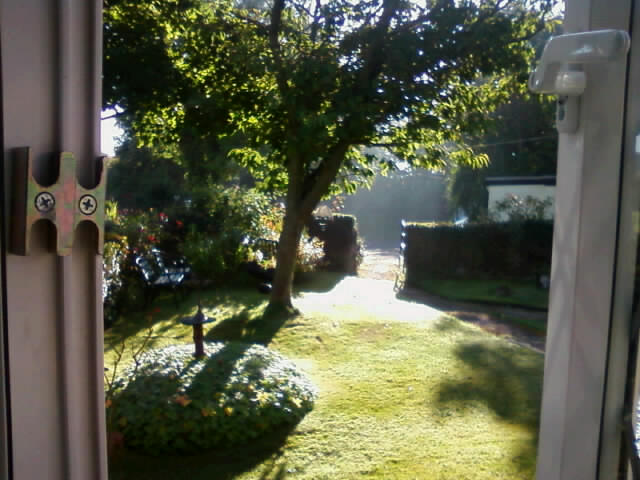
Just I thought I would treat myself to putting up a picture of Lettermore in Galway for this blog, I might as well, it's as close as we got to Galway today.  Himself announced on Tuesday that, come hail, rain or..."yes, snow", I interrupted his flow with something less than my usual tolerance.  Last night I got everything ready, and this morning, after a sleepless night in case I missed the alarm, I awaited his awakening before I put a toe out on the carpet.  Aha! I'm getting too fly for that mistake at 6 a.m.  

Opening a sleepy eye, Beloved greeted me with "What's the weather like?" 
"Well," I replied, "at 5 a.m., there was a heavy downpour with hail stones but it's offering sunshine at the moment".  

There was a silence.  Followed by more silence.  "What do you think", he asked, snugly wrapped up with 86% of the duvet tightly wrapped around him, "will we go or will we leave it until next week?". 

I'm up to that dodge as well.  "It's entirely up to you, Sweetheart, whatever you decide is fine by me" [this with a smirk into the pillow].


Even the early rising birds are amused by him, at this stage, or maybe that's bemused.I'm sure I heard one tweet "he'll stay in his cocoon".  I had a long chat with myself on Sunday about leaving the "Day Away" decision up to him.  If I say yes, and we go and it rains - "well, you wanted to come here, I didn't" is probably number one refrain on a list of thousands.  If I say "no" then "Ah but you never want to go anywhere" would be number one on the other list; playing safe was a cosy option and I grabbed it for all I was worth.  Mum used to do this to Dad, she called it "Rug Pulling", with capitals, and it always worked.  It worked this time too.  Rolling over into more of the duvet he announced "Arra, sure we'll leave it until next week, and we'll go to ......[wait for it]....CORK!."

So, we got up at 9 o'clock and headed off to do the weeks grocery shopping.  Over breakfast, the Wise One decreed that we shall go to Waterford one day [notice that casual 'one day'] next week as that train leaves at a respectable 10.25 a.m., (that's, as I pointed out to him if it doesn't sit down at Sallins, Hazelhatch or in the departure station) and we shall [shall we?] arrive in Waterford at 12.20 and the train home is at 14.50 pip emma.  Well Emma might just well get the pip, whoever Emma is, because if that train manages to run to schedule, then there will be miracles in the air.

At this stage I'm not quite sure if this is beginning to be an episode out of an Irish comedy or am I blurry irritated with it.  It's messing up my schedule for one thing, trying to organise history group meetings, meeting up with an old friend home from America, a days shopping with youngest daughter and a days photography with eldest, a bit of blogging and a bit of research on another project of mine... well, it's beginning to get in the way. A discussion while travelling out to our local Aldi this morning ran something like this

Me:       You know the original plan was to have a weekly trip somewhere we wanted to see
              travelling by car, and once a month a trip to Galway [heard of that place before?] or 
              Waterford by train.

Him:      Well, things have gotten in the way, the rain, that inner ear infection you got, that 
               funeral we had to go to, and then there was...

Me:        Well, I suggest that you and I take the "car" trips together, we try for Waterford next week and that we can take off in a couple of weeks time for more local trips to either Balbriggan or Maynooth on the D.A.R.T, then in October you can head down to Thurles for lunch with your old pal Jimmy, and I can head off, or do a few of my own things while you're away for the day...

The response was a soulful look accompanied by a little boy hurt voice telling me that he likes being in my company.  6'2" doesn't carry off little boy hurt too well with me.  I have Kerry blood in my veins and am not for turning.  I am a determined woman.

Me:      O.K., we'll see what we can organise [pause here for quick reassessment] Nooo! wait a minute.  I pointed out my old argument of 35 years together, 34 of them while he was working I was organising household, children etc., etc., and had made a life of my own.  So we are now agreed on the above agenda of car trips, local trips on D.A.R.T [Dublin Area Rapid Transit]
and lunch [solo run] in October to Thurles, Co. Tipperary - oh! and one day next week we're going to either Waterford or Cork.

Lovely.   


In the meantime, he'll be where he wants to be.  In the garden wrestling gorse, cutting hedges, murdering the buddleja, and planning his chicken coop.

I did mention the chicken coop didn't I.   Last year it was called the chicken run, but the girls had too much fun with that title and it acquired a new title this year.  O.k., so the story on the chicken accommodation is roughly this [using the patented time schedule for demonstration purposes, patented by Himself]

March 2008, I inherit and we move in full time in July 2008 after some minor roof repairs and decorating are done.  August 2008 he announces he is dismantling Mum's hen run and turning it into a vegetable patch.

Christmas 2009, while watching me draw up plans for a new extension to the house, he draws up Plan #1/sometime in-20?? for a hen house.

August 2010 extension commenced, vegetable plot prepared.  
December 2010 extension completed.

Still with me?

January 2011 Planning Application for Hen Accommodation Plan #2/anytime in near future/20?? is put before me.  I tell him that, apart from that I don't want it as near to the house as Mum had her hen run, and the whiff on hot summer days was something else, and that another part of the garden will be too cold in winter and far too hot in summer for the poor hens, he's free to put said hen accommodation wherever he chooses.

August 2011  Various brochures on various types of hen accommodation are acquired at Tinahely Annual Agricultural Show, Co. Wicklow.  They make an interesting contribution to the coffee table.

November 2011 - June 2012, rambling discourse on types of hen ensue.  He wants ten, I tell him that is too many.  Nearly everyone on the lane keeps hens, so the days [when Mum was alive] of selling off your surplus to the local shop have passed him by.  Besides, I remind him of his cholesterol level.  I suggest two Marrans, and he wants Bantams, I suggest Silkies and he decides to investigate Leghorns.  At the moment Ostriches are definitely off the list but the possibility of bustards is not.  Mum would be so proud of him, she kept quail, guinea fowl, marrans, silkies, woodcock, pheasants...I'd settle for one hen, just for a home reared egg!

September 2012 Dining room table [a large, long one] covered for two months with plans for Hen house/run/accommodation/you name it.  Dinner party for friends in early November necessitates re-acquiring dining table, plans sulkily put away.

December 2012  "Did anyone see my hen house plans?"

A silent 2013.

June 2014 "Why did I get convert your Mum's hen run into a vegetable patch?"  
                    "...'er, we wanted fresh veg and last years haul was fabulous?????"

August 2014.  "Where's that magazine you were reading the other day with those fancy hen trailers in it".

Himself was last seen, when not plotting train trips to Galway, digging out foundations for a hen run.  He built a two story house 5'2[H] x 3'6"[W] x 4'7"[D] twelve years ago for the cat, it will, it appears, be the template for the hen shack!


The cat currently sleeps in an abandoned cardboard box [full of old t-shirts belonging to youngest daughter who was throwing them out] on the veranda.  On winter nights she occupies the bottom left hand corner of eldest daughter's bed...it's nearer the radiator.


On that note...


12 August 2014

On being back in village life


Six weeks ago I was sitting down having a quick cuppa, pondering on life in general, when there was a tap on the kitchen window.  We don't get passers-by here as we are up a long lane, rather off the beaten track.  It was a neighbour, from down the lane, with whom I had grown up in this village.  To be more accurate, her sister and I are of an age and played cheyneys, hopscotch, and all the other childhood games together in a sunshine blessed childhood. Maura is seven years older than I am, and back in the day that was tantamount to light years.

"We're getting a history group together" she said, breathless from the climb up to our house.  "It's part of that group who keep the village tidy, something to do with heritage" she continued.  "I thought of you instantly, so are you game?  Will you come down to the pub on Saturday morning after the clean-up and we can find out whats what?".  I agreed, but pointed out to her that owing to a major disc problem in my back, I have never been able to take part in the clean-ups, and that this might cause some resentment.  "Ah! let it", said she.  "Aren't we too old to be pluckin' weeds out of the footpath, and don't we contribute financially, and anyway I've the same problem myself and don't physically participate".  Enough said, I was in.

On that balmy Saturday morning, it was arranged that a meeting would be held during the week to organise what it was all about.  Maura, Therese, Louise and I met up at the end of the lane and headed for our local.  There we met the chairperson, new to the village, twenty years ago, who told us that "being as how" we were probably the longest residing in the village, we "may know about the history of it".  There were jobs for everyone, she said.  It was like some sort of corporate business meeting.  Laura, another one of the villages "old residents" decided not to come in on the history group; she and her husband elected to join the graphics group; we agreed to keep her posted on our research and any historical information she had, she would pass it on to us.

Between us, we constitute the sum total of 254 years of shared history between us.  Our families all arrived from County Wicklow in the 1800's.  Mine after the Great Famine of 1847.  We're here from sometime around 1856-'59; Maura's family came in 1870, Therese is a relation of Maura's and descended from the same root stock and Louise can trace her family back to 1880. Some of us have seven generations to show and others five.

Resentment?  A little, from "blow ins" of only 80 years.  Bewilderment from those who landed here 20-40 years ago, the old families are all inter-related, except mine.  My family tended to marry out.  Throw a stone in this village and you'll hit someone who is related to somebody, and newbies find this bewildering.  It's a village of three parts, really.  Upper and Lower, clinging to the hill side.  The Upper part being the oldest.  The third part is the "Who's Who of Generations living here".


Mum's childhood friend [family arrived here in 1865] has joined us.  I love this; I get to share memories with a wonderful lady 86 years old and as mentally acute as a razor.  Her knowledge of village history is almost computer-like, and as I learned all the history from my Mother over the years, if Mary gets stuck, I have the back-up information.  Following on from that first meeting we met in my house, and over tea and sweet cake we never saw five hours fly by.

In the past six weeks, we have met every week.  The major group is keen to hold an exhibition of village history in the autumn and we are working towards that goal.  We do approximately four per cent work on it, and the rest is glorious.  Hours of chat, memories of people long gone but very lovingly and in some cases unlovingly remembered; tonnes of laughter and above all a new found sort of kinship.  We have decided to continue on meeting every month just for the company and the craic.*

We are the last of our breed.  The twenty plus age difference between Mary and the rest of us is non-existent.  We were raised with the same principles as she was.  Life was hard in the village for her family and our families; but there was a pride, a joy and a fervour in making something of oneself that encompassed the generations right up to ours.  Social media has changed a lot of things nowadays; some of it for good, and some with disastrous outcomes.  

My night was made last Tuesday when Louise and Therese walked me home from a meeting in Maura's house.  We do that for each other - really it is just an excuse to continue the gossip.  We stood for another hour chatting over my garden gate at midnight.  As they took their leave Louise turned to me and, calling me not by my present surname but by that of my Grandfather, said "see you next Tuesday, I'll bring the buns!".


* craic = [Ir.] fun, used to describe a joyous occasion.


31 July 2014

So he's retired, and we're going travelling around the country! Yeah!

 OH, now fully retired, and the recipient of a free-travel pass from the Government.  It's a lovely ornament in his pocket, truly it is.  He has me persecuted since last March telling me of all the places we're going to go to in the Summer.  Lunch in Galway, by train, for the day; Waterford, here we come [not enthused about this one because of the trains that serve the route - see previous blog] Cork, Tralee, we're off, says he.  


Yes.  Well, I have a theory.  I don't think the dear man wants to leave his precious garden, but, being a country man, and an Irish country man at that, the thought of having something for nothing is eating into him.  He longs to avail of "free travel", but his ponds need cleaning out or the tadpoles may not turn into frogs.  That hedge has grown 50ft in the past ten minutes, it could have the whole place covered if we go away.  Ah sure the rain might come.

Take this month for example.  On the first Tuesday in July he announced that this is IT, we are going to Galway on Tuesday, hail, rain or snow. [Remember, it's July and it's heatwave time]. I had been the cause of one missed trip in June due to a stomach bug, but on the first Tuesday in July I arose at 6a.m., got my back pack loaded with necessary book, notepad, and CD player to while away the journey.  I went into the bedroom to call the little darlin' at 7.  Eldest daughter was bringing us into Heuston Station to catch the 9.25 to Galway.  Gently shaking him, I told him it was time to be up and about.  "Ah, sure there's another twenty minutes yet before we have to get up" says the intrepid explorer.  Twenty minutes later he tells me that the weather forecast said it might be raining in Dublin, [on Ireland's east coast], so we might as well not chance it raining in Galway [Ireland's west coast] in case we got wet.

Still, the day had benefits.  I texted Eldest daughter and told her she was off the hook for taxiing us into Dublin.  Packing a lunch, I pushed him out of the garden [the rain having missed us by the breadth of the Atlantic] and into the car.  "Where to" says the Alan Titchmarch-fan; "The Dublin Mountains" replies the long suffering "!Are we going tomorrow!" wife.  God can be very good.  He gives us delights when we least expect them.

Over the years I have travelled the length and the breadth of the Dublin Mountains.  As Mountains go, in global terms they're only Very Large Hills, but they are the mountains of my home county.  I have seen them in all weathers, but this time we found a small boreen that we had never seen before.  In Irish boreen [boar-een] is a lane that is not quite a road, but definitely not a dirt track.  This one descended down into the valley in stages.  The further we travelled, the more beautiful it got.  The air was heavy with the scent of roses, honeysuckle.  Ox-eye daisies large as plates lazily swayed in the delicate breeze; rabbits sat in smaller lanes leading onto farmland looking for all the world as if they had hopped out of Watership Down. Bee's drunkenly wafted from flower to flower and hover flies darted about not quite sure which blossom needed attention next.

Around a corner we saw Scottish Highland Cattle milling around a pond, completely unexpected, another bend in the road revealed a gaggle of geese strolling up the middle of the boreen.  If Tess of the d'Urbervilles had stepped out from a cottage it would not have surprised me.  We did come across the local Tess, but she was too busy with her mobile phone - Facebook - no doubt, to pay much heed to what beauty surrounded her.  By now we were right down in the bottom of the valley, I half expected the Doones to come riding past, and then we saw it.  A beautiful lake, placid with mallard sailing on it.  Surrounded by trees and fields full of wild flowers.  

We decided there and then that, if we can find the boreen again, we'll be back in the autumn when the colours will make this place truly heavenly.  It was only as we ascended up the winding road out of the valley that it suddenly struck me that we had been in Bohernabreena.  I had often heard my Mum telling me about a girl she worked with who came from there.  A place of which you could say "the land that time forgot".

Two bends over the length of half a mile when we reached the top of the valley put us back on the main road to Tallaght in Dublin.  Traffic roared up and down, and no rabbit worth his carrot would risk his cottontail to go near that road.  Still, it didn't take the magic off the day.  We had had our picnic beside the lake, watched intently by a flock of sheep who commented endlessly and reinforced my dislike of sheep.  I'll take cattle any day and dairy cows are Number One.

The following Tuesday was nominated Travel to Galway day.  This time I packed the bag the night before and waited for Himself to get out of the bed before I stuck a toe out.  He was sure he heard a rattle of thunder, it was too hot to travel [right enough it was 25 degrees and rising and this at 8 in the morning].  We'll go next week he announced.  No, we won't came the reply.  I had shoved all the things I had to do into one week to be free to travel with him, and nothing and not even love would make me change that week.  This Tuesday the Galway races were on.  The train, I was told, would be too full; too many people drinking and making things uncomfortable so - next Tuesday I hear we're off to      C O R K!   I'll let you know if we get there!

24 June 2014

Irish Rural life and the way it might appear

On one of our recent trips away to rural Ireland, OH and stayed in a small village overnight, while attending a wedding.  The wedding was another story in itself, but I was amused by the Parish Newsletter which I discovered, was written by the parish committee - typed up by the local spinster on her new Windows Vista computer, [second hand in a thrift shop, and sure isn't it workin' grand, as the lady of the house we were staying in told me.]

The newsletter had all the local gossip in it, and it set me to thinking how lovely it was to find a newsletter that wasn't pc.  Sometimes I wonder have we become so politically correct that we cannot speak our hearts for fear we'll land ourselves in Court, prosecuted for libel and whatever else.  Anyway, I took a couple of parish newsletters that I have come across in my journeys over the years, and put one together, totally fictional, but something on the lines of what once might have been commonplace in rural Ireland.  Castlebattery and the other villages are a figment of my imagination, but there are many Castlebattery's in Ireland, Fr. Finnery is another piece of fiction, but in my childhood there were many Fr. Finnerys' lectures roaring out from the pulpit and I am sure that Henrietta Delaney would be truly overcome by the holiday slides if she existed.  Maybe some day she will.


CASTLEBATTERY PARISH NEWS LETTER     

MASS TIMES: Sat. 19.30 [if Fr. Finnery is home from the races in Kilmageegee.]
Sundays: 10.30 and 12.45 [please be on time for the 12.45 Mass as Mrs O’Shewlawan likes to have the Father’s dinner on the table by 1.30 so as she can get away to the bingo in the parish hall at 2.30].

Castlebattery Tidy Towns
Following on their big marks increase in this year's Tidy Towns competition, the hard working Committee are already preparing for next years competition and towards this end, they are holding a Church Gate Fundraising Collection on the week-end of October 12th - 13th and a Table Quiz on the 15th November in the Four Flowers Hotel Castlebattery at 9.30pm. Following the exertions of their fundraising efforts, the Committee will be on their annual trip to Santa Ponsa in early December and so no committee meetings will be held until 14th January. Please support the committee.

Ceili Dancing
The County organisation responsible for promoting all non-competitive céilí dancing amongst every age group in Ireland, has been awarded a grant from the County Council to organise six céilí dances  between now and early December.  The first of these will take place in St Declan's Parish Centre, Barnahoolia on Sunday 23th October from 2:30-4:30 p.m.  All are welcome to attend and participants will be guided through 5 céilí dances by certified céilí dance teachers.  No experience is necessary.  Fr. Finnery has stated that this is not a match-making ceili and will all couples attending please observe the proprieties.

Admission is £5 (£2 for childer) including a break for refreshments, the refreshments will be sponsored by the Cummagweela Golf and Pitch and Putt Society, as they have a surplus of beer which Mick the Ferret found in the basement of the Four Flowers hotel, the beer is only five years past its past due date.  Just come on the day or phone Marty Hourican for further information.

Sport
Hard luck to Knockemdawn Hurling Club which lost the Intermediate County Hurling final to Killawaspa last week-end.  Father Finery has stated that the Sunday collection in the Church of the Blessed Martyr, Castletownless, is not to be put aside and used for condolence pints in Barney Mulligan’s pub on Sunday night.

P.s.
We wish Frockenstown every success in the Senior County hurling final next Sunday afternoon in Ballymuckla Park against the Killawilla Senior team.  It is to be hoped that they will have better luck than the Inter team.  New jerseys have been issued to avoid confusion with the Killawilla team as happened last year when Ballymuckla wore, with pride, white jerseys with a pink stripe and yellow sleeves, and Killawilla wore pink jerseys with a yellow stripe and white sleeves.  We have it on good authority from the Haymaker Quigley over in Bannawanton that Frockenstown is wearing navy and red jerseys this year.  Killawilla will take to the field sporting their new red and navy jerseys on Sunday.

Life in rural Ireland was, despite current revelations in the media, innocent, and moved at a slow pace.  The majority of citizens had no idea of what went on in homes for unmarried mothers.  Looking back, it is hard to imagine that there should be such ignorance, but the ignorance was in the behaviour of those who perpetrated what went on there, and in the families who sought to hide what they considered their shame, in such places.  Nobody asked questions, and there was an innocence in the acceptance by the people of church teaching.  What was overlooked, and should never be overlooked is the fact that people are people with all the good and bad that resides within every individual, and being a member of a religious order is neither an excuse nor a cure for the inner self.

I remember how delighted people would be that the local curate had called, if the Parish Priest paid your house a visit, sure weren't you mixing in high society altogether was the general thought.  It was the hope of every mother then that if you had four children one would become a priest, one a nun, one go into the civil service and one would stay at home and care for you in your old age, and sure, if they managed to get married after you were dead and gone, wouldn't that be wonderful altogether.

My maternal Grandmother, a lovely elegant lady, annoyed her own Mother by marrying a man 18 years older than her.  When he died nine years after they married, of Parkinson's Disease, Great-Grandmother resumed communication with her daughter - to tell her how stupid she had been, marrying and now left to rear three children aged 7, 3 [my Mother] and 18 months.  When the eldest died at the age of 11 of diphtheria, Great Grandmother informed her daughter that this would never have happened if she had done as she was told.  Join a nunnery.  Ah! charitable christian Ireland.  May you never return to that attitude.  Gradually, over the years, with every house in the country having at least one t.v., the rural Ireland of yesterday is dying away.  I have no regret for the loss of the cruelty and hardship that was put on people, but for the gentle innocence and the old fashioned courtesy that is passing, that I do regret.  

I refuse to let go of the lovely innocence of my youth, both in suburban and rural Ireland. Childhood holidays where the rainy days were spent making button pictures, the buttons supplied from my paternal Grandmother's enormous sewing box, shoe bags for school in September, hand stitched using leftover pieces of chintz curtains.  To this day, I still hand stitch bags for everything; bags to hold newspapers until everyone has had a chance to read them. Bags to hold the unopened packs of kitchen towel rolls and save space in the kitchen.  They nestle between a book case and a press in the study.  The latest effort is Toile de Juouy [blue and white]; I have hand stitched the cream and cinnamomn cushion covers on the garden room chair - the material once adorned my Mother's windows as very pretty curtains.  Why not use a sewing machine I hear you ask?  Well, when we had sewing class in school, being left handed I was awkward, and the machine at home fired needles out from it like a Bofors gun.  That put me off sewing machines for life.  The nuns were insistent that we "lefties" should use our right hands as we were "spawn of the devil" if we didn't.  I can sew and write with either hand, but typing I still lead with my left hand, a fact that irritated the nun that taught me.  A right handed lady, she feared for my soul with my typewriter!


08 June 2014

'Tis glad I am to be Irish


Wind harp
[John Montague]

The sounds of Ireland,
that restless whispering you never get away from,
seeping out of low bushes and grass,
heather-bells and fern,
wrinkling bog pools,
scraping tree branches,
light hunting cloud,
sound hounding sight,
a hand ceaselessly combing and stroking the landscape,
till the valley gleams like the pile upon a mountain pony's coat.


The Farmer's Son
[T. D. Sullivan]

Where'er are scattered the Irish nation, 
In foreign lands or on Irish ground,
In every calling and rank and station
Good men and true will always be found;
But 'midst their masses
And ranks and classes,
When noble work must be dared and done,
No heart's more ready,
No hand's more steady
Than the heart and hand of a Farmer's son.

His homely garb has not fashion's graces,
But it wraps a frame that is lithe and strong;
His brawny hand may show labour's traces,
But 'tis honest toil that does no man wrong.

For generous greeting,
For social meeting,
For genial mirth or for harmless fun,
'Midst high or low men,
'Midst friend or foemen,
Oh where's the match for a farmer's son?


Ireland
[Francis Stuart]

Over you falls the sea light, festive yet pale
 as though from the trees hung candles alight in a gale
To fill with shadows your days, as the distant beat
of waves fill the lonely width of many a western street.
Bare and grey and hung with berries of mountain ash,
Drifting through ages with tilted fields awash,
Steeped with your few lost lights in the long Atlantic dark,
Sea-birds' shelter, our shelter and ark.


OH  has retired, and we now venture off on "day-trips" to various places.  He is now entitled to free travel on bus and train, and this has opened a whole new vista.  Some of his great travel plans come to naught; being more experienced than he with Ironród Eireann, I am somewhat underwhelmed with the Dublin to Waterford train.  Over the years while he was working and the girls were at school, I usually paid an annual summer visit to a relative; my journey taking me to Athy in Co. Kildare, on the Dublin Waterford line.  I have an abhorrence of the area known as Hazelhatch.  I am sure that the people who live in Hazelhatch are perfectly wonderful; but they have my sympathy.  Two and a half hours sitting a mile out from Hazelhatch on a train that has chosen to sit down, when I pick my annual day out, has not enhanced the Dub/Wat line for me.  This is not an odd hiccup.  No, it is more of a regular feature.

 The last trip was 40 minutes delay [I was flabbergasted when the train started to move], the one before that we sat for 1hr:58 minutes, two and a half hours the previous one...why didn't I just drive down?  Well, the rewards for taking the train [when it travels as per schedule] are hares dancing in a field, cattle running across another field to look at the train, a lone white horse with windblown tail and mane standing in a boggy field.  On the return journey the rewards are manifold,  the setting sun lying golden across the green fields, colouring the May [Hawthorn] and elder bushes, rabbits grazing 'neath the shelter of a ditch or low wall; calling to mind Watership Down, and tractors, days work done, heading back to the farmyard.  This is MY Ireland. The 9p.m., train never sat down yet, Hazelhatch or otherwise.

We have agreed, pro tem, that he and some of his recently retired friends can take the Waterford trip, lunch and a few pints, a boy's day out while I get on with whatever it is I want to do.  In two weeks time we are heading down to Galway for the day.  Train to the city, bus to Salthill, lunch in the Galleon restaurant, stroll along the prom, bus back to train and home by ten. T'will be a grand day no doubt.  Weather permitting.

Some years ago E.D and I took this trip in March.  She was treating me for my birthday and it was a Grand Day.  The weather proved mild, and we got to do everything we wanted.  I brought a notebook along with me to jot down anything that tickled my fancy and the conversations on the train down to Galway had me in stitches:

"...Carty said he hadn't a knee nor a knickers on him when he joined the club..."

"...pinta green stuff spread all over his face to take the redness outa that puss of his and he that high on blood pressure tablets..."

"...mind you, Mickeleen The Ferret said yer man's very nice, not like most as come down from Dublin with their uppity *D4 idea's..."

"...herself at home couldn't go to the Barnabullia dinner dance 'cos she had to stay home and watch them Kardizzynan's on dat show, now they've got the sattylite..."

There's nothing like a country train to hear all sorts.  Reputations are made and broken, news is passed along and all of life is there.  Irish life that is, and long may it, in it's uniqueness, last.  

"...told him them cattle of his had the scour, OOOH! yes, powerful bad it was too, but looka, would ye tink he'd listen...vet is drivin' 'round town in his big jeep on de profit he's making on them cows and their effen scour so he is...l

I am look forward to our day trips; some by car and some by train.  We dine out in local hotels and restaurants, and my face is nearly like stone nowadays trying not to laugh out loud and "make a holy show" of myself.

"Ah! Ireland, Mother Ireland, on your own facing the Atlantic spray, 'tis God's own gift I was born here!".  A quote from my Father, who loved his native Kerry and wore his county pride like a blanket. 


* D4 a very wealthy area of Dublin full "glamorous people; one of the most desirable area's to live in in Dublin.


03 June 2014

The Great War and our Village

Last year while out on one of our country drives, OH and I came across a charity shop in a small village in Co. Westmeath.  It was one of those places that had everything from a needle to an anchor and my biggest regret was neither of us had come away with our cards and only had whatever was in our pocket.  Despite this, I managed to buy a lovely linen table cloth, complete with embroidered shamrocks and edging that was only slightly faded in the sunlight.  A good wash with lemon juice in the water brought it back to being near enough to its usual white.  I paid the princely sum of approximately £5 in euros for it.  The bargain of the century in my opinion.  Since then it has graced my kitchen table on, as my Kerry Grandmother used to call them, “Saints Days, Holy days, birthdays and when guests came for tea”.

Among my other purchases were a vintage biscuit tin with roses on it [mild rust attached at bottom corner -  €1] it now graces my desk with my pens and pencils in it, and four shabby, much worn and handled wild seed packets with a date of 1989 on them.  These cost me the princely sum of 50 cent.  They promised me that I would have a garden full of Scabious, red poppies, Scarlet Pimpernel to mention but a few. 

OH laughed at me when he saw the date; but as I said, what have I to loose.  The charity benefits by 50c, and if they can cultivate thousand year old wheat, well… ED started school in 1989, and that doesn’t seem so long ago.  When we got back home I mixed up all the seeds together, soaked them in water over night.  On the morrow I filled up the watering can with my watery seeds and, while not quite dancing around the garden like Pam Ferris in Rosemary and Thyme singing “Nymphs and Shepherds…” I fairly flung the water around the areas that OH hasn’t managed to cultivate.

We already have Rosebay Willow herb, Stone Crop, Bird’s foot trefoil, Yarrow, Queen Anne’s lace, Vetch, Lucerne, Rough and White clover, and more Orange and Yellow poppies than we need.  I even managed to introduce pink poppies into the garden a few years ago.  They came in a pot of Fuchsia I had bought in our local garden centre.  It was closing down and I was first in the queue to load my trolley.  Plants were crammed together on trestle tables for sale and seeds obviously had been exchanged.  I came to call them my “value pots”.  I purchased my charity plants in April last year and OH spent the summer shaking his head and gleefully telling me “I told you so”.


Four of Mum’s cousins no longer live in Ireland, but had decided to “come home” for a visit to Ireland.  They avoided The Gathering of last year, instead choosing 2014 to be their year to travel.  The son of one of them did the driving and they arrived last Wednesday.  I had organised accommodation in our local hotel for them.  The youngest is 81, the eldest, who lives locally, is 93; she booked into the hotel with them for companionship.  

They all stem from here where I live.  Their Great-Grand or Grandfathers were my Grandfather’s brothers.  In their 80’s you say and you’re 60 how come the generational difference?  Grandfather was the youngest of seven brothers and four sisters and the one who stayed to continued dairy farming here.  The cousins are descended from his elder brothers.  Over the years they had kept in touch with Mum, and when she passed on six years ago they corresponded with me.


On Saturday afternoon I hosted afternoon tea in the garden for them.  We sat out in glorious sunshine and I brought out the best family china for the occasion.  Some of it inherited from our mutual Great-Grand/Grandmother.  All of them had spent childhood holidays here and we had a memory fest!  The old gate OH discovered buried in the ground and which we restored, caused many Ooh! and Ah’s! Winnie and Deena – the eldest at 87 and 93 remembered swinging on it and were delighted to see it back only a few feet from its original site. On the new lane we have created at the foot of OH’s formal flower beds, there is a riot of colour with red clover, red poppies, cranesbill, corn marigold, fox gloves [which we already had] and many more wild flowers.  OH is remarkably quiet about this show of colourful glory.  My smirk is wide. 


The sight of the red poppies caused Laura (86) to recall her Father’s memories of the effect of The Great War on the village.  Three boys joined the British army and went away to fight on Flanders Fields. Two of them, Georgie and Ned, were brothers.  Both survived the war, but never returned, apart from visits to family, choosing to live in England.  One of them made a career in the army and saw fighting in India, Africa and elsewhere.  He retired, as far as she knew, to open a pub deep in the English countryside.  Tom returned, suffering from the effect of gas and lived on his pension to the ripe old age of 77. 

Georgie and Ned’s last surviving nephew died two weeks ago.  He was born in 1920. No one of that family lives in the village now.  All descendants have emigrated. Tom used to sit on fine days on a low wall near the bus stop.  As children we loved to hear his tales of the war.  He had been a “gunner” as he old us.  We, being very young and very innocent of life in the great big world equated this with “runner” and wondered how he ran around with a great big gun under his arm.  He had shown us pictures of himself and his comrades beside their great big gun.  In those days, everything was “great big” to us..

My Grand-Uncle Nick, third brother up from Grandfather, was keen to join up in 1914 at the age of 16 but his eldest sister put her foot down on this plan.  Their mother had died when my Grandfather was thirteen and Kate (second eldest child) reared the youngest members.  Nick died of TB aged 21, working on the farm.

Emily (81) remarked on the current fashion for young men to wear their hair cut short over their ears and to wear beards.  One of her Grandsons, she told us, has taken to wearing Edwardian style suits, and has gone from looking like a member of ZZ Top to someone just about to embark for the Somme.  As she was describing him, a neighbour’s son arrived with some post that had been dropped into his Mothers letter box by mistake.  Sporting the short back and no sides’ haircut, neatly trimmed beard, grand-dad shirt and khaki trousers with braces and brown boots with a high shine on them, he brought her description of Shane to life. The only thing that ruined this living sartorial piece of history was the mobile phone ear piece.  2014 meets 1914.  I wondered if the mobile phone had been invented then, would some lives have been saved.

04 May 2014

May Bank Holiday gets me thinking about June's Corpus Christi

It is the May Bank Holiday, a bank holiday we acquired years ago when the Labour Party of this island nation of ours were in Government.  Prior to that, we celebrated the Feast of Corpus Christi on the first week end in June.  Once we returned to school on 7th January after Little Christmas we lived for St. Patrick’ day to fall on a Monday or Friday so that we would have a long week end off school.  Half Term holidays were not the norm in my childhood; unless it was a very long term until Easter.  We also had school on Saturdays and two days off at Halloween.


June and the Corpus Christi week end are filled with memories for me.  Once we made our Holy Communion we were considered fit enough to join in the Corpus Christi procession.  For weeks before the Big Occasion of Our Making Our Holy Communion [the nun’s always seemed to refer to it in sentences containing capital letters] we were paraded around the school grounds wearing veils of every description and hue, from brilliantly Tide White to Sunrise Yellow.  Veils often donated by past pupils and veils made from net curtains.  The purpose of this?  Well, I think the nuns believed that if we were marshalled enough; and used to wearing the veils enough two things would happen.  We would walk like little saints in our parish procession at Corpus Christi, and maybe the idea of wearing a veil might hint a few 7 year olds into thinking about joining the convent.  In a class of 33, twenty six took the veil.  On their wedding day.   We’re not counting the 14 divorces and widowhoods here, of the other seven only one was inspired to join a convent, and at that, much to Mother Ignatius’ disgust, a different order.


From the age of 7 until, and memory is shaky here, either twelve or The Vatican Council’s changes, my friends and I were dragged down to the parish church, faces that would turn the milk sour on us, and pucked into angelic smiles by Mothers who didn’t want anyone to think their darling daughter wasn’t a living saint.  There is nothing like an Irish Mother to land a tight fist between the shoulder blades and look at the same time as if she was straightening your cardigan.  If your own Mother didn’t descend to such tactics, you could rest assured that Mrs Mulligan had no such hesitation in landing both you and her own daughter Maura a “laminer” as we used to call it.

Boys seemed to get off lighter, we were caught with the veils.  What had seemed wonderful in May on First Holy Communion Day, all dressed up in white lace and cripplingly tight shoes, was agony in a crowd of people, all walking along mumbling the Rosary and swatting at midges.  I blame the midges.  A swatter never stopped to look if he, or she, were pulling at your veil as they vented their ire on the insect.  Mothers had a happy knack of putting your veil on, tightly adhered to your head by clips, and God help you if Mr O’Callaghan, and he 70 years of age, aided by a walking stick and a hip flask of “Holy Medicine” caught your veil.  If he didn’t pull the hair off your head as well as the veil, then God was surely on your side then.


Mr O’Mara and Mr O’Callaghan combined could bring down the veils of a nation with sublime ease.  Mr O’Mara, in the year of 1962, stays in my memory.  Painfully.  We were gathered in procession, sons, daughters and proud parents, shuffling along down the church lane, up the drive of the local Big House, and back up the church lane, singing “Bring Flowers of the Forest”, reciting the rosary, and generally aiming to look as pious as possible.  My friend Mary and I had come to terms, as hardened communicants of two years, with the fact that the veil and the procession were unavoidable aspects of our lives.  Pure selfishness on our parents’ parts deprived us of the joy of racing off over the hill with our other friends, playing cheyneys, hide-and-go-seek and collecting blooms from a local woody dell.  No doubt, as part of a major grown up scheme to get them into Heaven when the day came, parents had concocted this punishment for us to make them appear holier to God.  We were convinced of it.

That CC procession started out well. We were scrubbed till we glowed; the boys had their best short trousers, sleeveless jumpers, shirts and ties on and all of them had their hair slicked down with the Daddy’s Brylcreem.  We had our summer school uniforms on us, pale blue gingham in my case, pink spots in Mary’s, [we attended different schools] and our veils were pinned to our heads [I am sure my Mother aimed for my hair] with whole packets of clips.  As we came along the home straight, just out of the gates of the Big House, and almost onto the church lane, Mr O’Mara and his daughter barged in mid centre of the line.  Mr O’Mara in his wicker bath chair pushed by his only surviving single daughter, Mildred.

It was not in Mildred nature to either say “excuse me” or “Sorry” to anyone under the age of forty.  She treated us to a glare from behind her long red nose and bottle lensed glasses and hissed “make way for Father”.  I fell in one direction, and would have broken my arm only Mum grabbed hold of me and Mary staggered into the wall across the lane, winding up with a shiner of a black eye where she had put a hand up to protect her face.  The picture of saintly holiness, Mildred ploughed on and if she missed a few parishioners, well her father was nothing if not diligent in striking out with his walking stick.  An evil looking shillelagh with a nob on it that would strike fear in the heart of the Parish Priest himself.  Still we survived these years.  In later years we often told each other that it helped us negotiate Grafton Street in Dublin in rush hour.  We were adept at ducking and diving by then.

To-day the parish church is closed after the last Mass of the day at 11.15. Where once there was a Parish Priest and two curates, today’s incumbent services three churches, He has three miles to go for the 10.15 in our village church and then after 11.15 in the parish he heads to another village for the 12.30.  Mass, which could and did take up to two hours back in the day now takes twenty minutes.

Twenty minutes that is unless you go to the other Parish nearby at 10a.m., on a Sunday morning.  It’s a family Mass.  Being a wealthy parish it has a different parishioner attending this Mass.  This is the Yummy Mummy and Hands On Daddy Mass, with little Saoirse, Caoilan, Bethany-Marie-Eve and Torquil.  On entering the church, the cacophony of sound assaulting your ears is like the chattering of a wood full of sparrows.  Mummy’s stand in the aisles chatting to each other, Caoilfinn thumps Darragh, who in turn uses Piglet to take a swipe at Hayleigh-Sarah-Louise.  Foodie Dads chat about that wonderful beer they discovered at that terrific market down in wheredjacallit, and the joys of tofu, gluten free bread [and not a coeliac among them] and green tea; the elderly also attend this Mass, especially the women.  It was the traditional time to bring children to Mass if the husbands had attended the 8.30 sodality, after Vatican II removed the fasting before taking the Eucharist rule. 


Nowadays these elderly women can look forward to a mass filled with the voices of yuppie children raised loudly in singing Allelulia, Allulelia and even on occasion Alleluia, kicks in the back of the knee from some four year old terrorist who Mummy is trying to stop from racing off up the middle aisle to demand “one of those white bikkies, now, I said NOW!” from the Priest.  Oh! The poet had it right, “all’s changed, changed utterly.  A terrible beauty is born”.  There’s nothing beautiful about the temper tantrums these little darlings can throw.